Technology has always moved at its own strange rhythm. With the emergence of every technology, whether it was the invention of the computer or something as simple as the plough, people have always taken some time to absorb it into their daily lives. Every generation meets a tool that pushes the world forward. Until now, people have always needed time to get used to new innovations and slowly fit them into daily life.
Nevertheless, Artificial intelligence has broken that pattern. Within a short period of time, artificial intelligence has become a ubiquitous part of our lives, contributing considerably in various fields like healthcare, finance, and education. As technology keeps advancing faster and faster, it becomes important to decide whether AI should be open and available to everyone, instead of being locked away by a few powerful groups. The real question is: why does it matter that everyone can use AI?
This question leads directly into a deeper conversation about human rights, digital rights, and the ethics of AI. The answer to that question is strongly emphasized in the book ‘The Second Brain: AI and the Human Right to Intelligence’ by GS Steele, which insists that AI access is not a luxury but a requirement for social progress. AI is not just another invention like the plough or the printing press; it is a tool that directly expands human capability. The author argues that, because AI boosts intelligence, productivity, restricting it automatically restricts the growth of entire populations. AI would deepen inequality, as those without access would be left unable to compete economically, socially, or even politically.
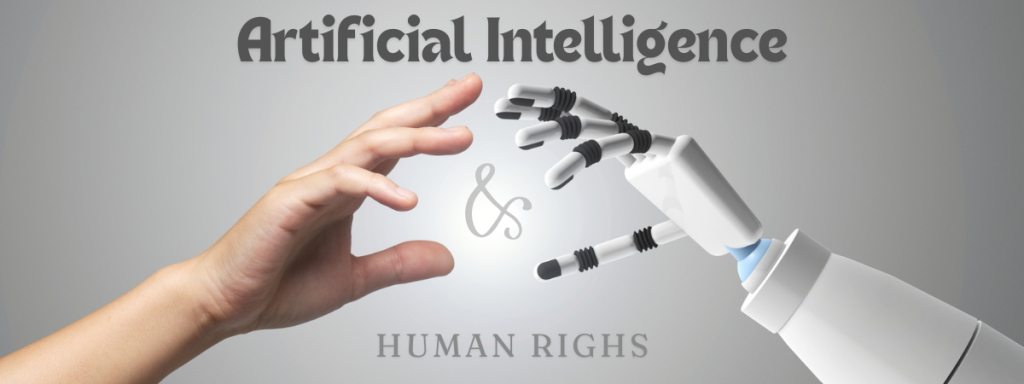
Artificial Intelligence and Human Rights
In simple terms, human rights are usually described as, of every person should have dignity, education, health, expression, privacy, and the ability to participate in society. Today, participation in society increasingly depends on digital tools. AI is at the heart of these tools, which means that access to AI affects how equal or unequal life becomes for people. The book argues that AI has crossed the line from being a simple invention to being a resource that shapes human capability. This is important because whenever a technology affects someone’s basic ability to learn, work, or communicate, it becomes linked to human rights.
In this light, even the Global research supports this idea. Reports from the United Nations, UNESCO, and the World Economic Forum all highlight that AI affects education, job opportunities, healthcare access, and political transparency. When a tool shapes these areas, it becomes a matter of fairness and moral duty. So, if access is limited, then rights become limited too.
Digital Rights as Basic Human Rights
In today’s world, digital rights form a new layer of human rights. These include access to the internet, digital literacy, and the ability to use digital tools safely and freely. AI sits at the center of this layer because almost all modern digital systems now rely on AI for speed, decision-making, and security. Steele explains that AI should be viewed in the same way that societies once viewed literacy. When reading and writing became essential, literacy turned into a right. Without it, people were excluded from progress. AI is beginning to play the same role. If you cannot use it, you cannot fully participate in the world that is being built. If someone has not learned how to use AI or simply does not have access to it, they risk becoming irrelevant in a world where every field is now shaped by artificial intelligence. They may find themselves pushed to the margins, unable to keep pace with a society that increasingly depends on these tools for work, learning, and everyday life.
Additionally, digital rights experts warn that the lack of AI access will hit poorer communities hardest. It will make poor nations even more dependent on wealthy countries. It may also cause a rise in digital colonization, a term the author used to describe situations where countries depend on foreign AI systems for education, work, health, or governance. Thus, consequently, digital dependence will quickly become political dependence. When people cannot control the technology they rely on, their rights become fragile. Instead of them controlling the technology, they would be controlled by it. This does not mean being directly commanded by AI, but when it has deep intervention in every aspect of life, it simply means we are, in some way, being controlled.
Ethics of Artificial Intelligence
With every technology, there are some terms and conditions, or a code of conduct on how and where to use it, and to what extent. The ethics of AI is not simply a discussion about how machines should behave. It is a discussion about how power should be shared. The ethical concerns surrounding AI often include privacy, bias, surveillance, and the possibility of misinformation. These are serious issues, but there is another question that stands above all others. Who gets to use AI?
The author constantly stresses that if AI remains locked away in elite institutions, private corporations, or wealthy nations, the world will experience a divide far greater than the divide caused by industrial machines or the early internet. To support this, studies from MIT and Oxford show that AI will transform workplaces, but only for those who have access to AI tools and AI literacy. Others may face job losses, lower salaries, and limited opportunities. Ethics is not only about preventing harm. It is also about ensuring fairness. When a technology increases human ability, it must not be limited to those who already hold power. Otherwise, the power gap grows and becomes nearly impossible to close.
How Artificial Intelligence Is Affecting Human Rights
AI affects human rights in several clear ways. First and foremost, it affects the right to education. AI-powered learning tools can teach languages, math, coding, and science in personal ways that traditional classes cannot match. Students who have access will learn faster. Students without access will fall behind. Furthermore, it affects the right to work. AI-assisted workers are more productive, creative, and efficient. Workers who do not use AI may not be able to compete in the job market.
Alongside, it also affects the right to healthcare. AI can detect cancer, predict infections, and analyse medical records faster than human doctors. Patients in regions without AI access will receive weaker and slower care. It affects the right to equality. Without access to AI, entire populations may lose economic and social ground. This leads to deeper inequality across generations. These effects are already visible. They will become stronger over time.
Why AI Access Is a Human Right
Steele puts this idea at the center of its message. In his book on AI, he says that access to AI should be seen as a human right because denying it would deny people the ability to grow, learn, participate, and compete. It is not only about convenience. It is about survival in a world shaped by intelligence. AI increases human potential. Withholding it limits human potential. The author also shares a powerful example to explain it in a more nuanced way. He explains that withholding AI is similar to withholding education. It keeps people underprivileged. If AI is treated as a shared resource, it becomes a tool for expanding human knowledge. Scientists can make discoveries faster. Teachers can build better lessons. Doctors can treat more patients. Writers and thinkers can explore new ideas. Society becomes smarter as a whole.
But if AI becomes limited to a few groups, then it turns into a global divide. And with the increasing dependence on AI for everyday tasks, this divide will be more dangerous than any before. It is not just about who works faster. It is about who gets to participate in the future.
Why AI Access Is Important for Society
Society depends on shared progress. When only a fraction of people benefit from a powerful technology, the rest are pushed to the margins. AI is now woven into every system that supports modern life. Keeping it exclusive would weaken economies, increase inequality, and destabilize politics. Research from Stanford and the OECD highlights that countries that invest in broad AI access experience growth in education, entrepreneurship, and innovation. Societies that restrict AI access experience the opposite. The book makes this point clearly. If society wants a strong future, its members must have equal access to the tools that shape that future.
Henceforth, AI is not just a tool. It is a gateway to the next chapter of human progress. It affects how we learn, how we work, and how we achieve fairness. When access is open, AI becomes a